

The Wildcat was never just a mascot.
On October 9, 1909, Kentucky defeated Illinois, 6 to 2.
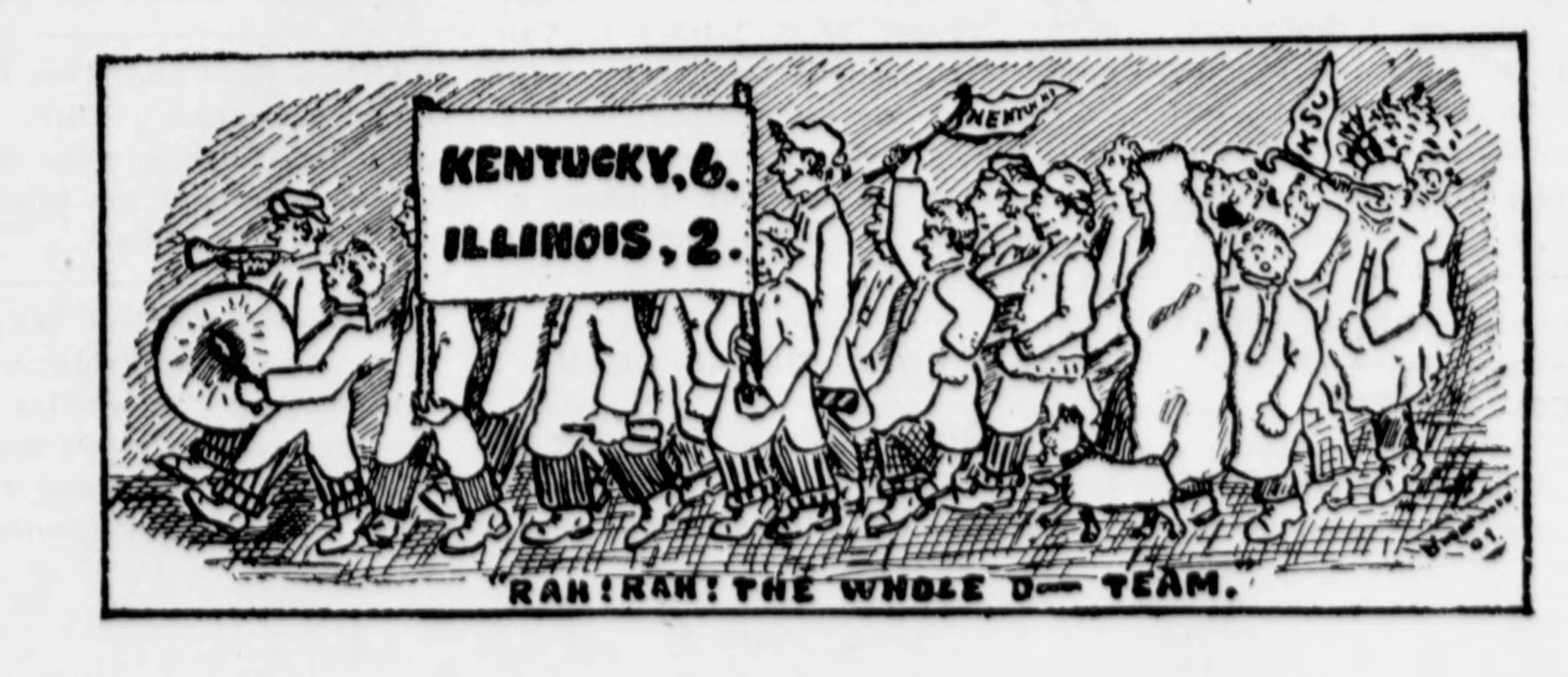
- Later tradition
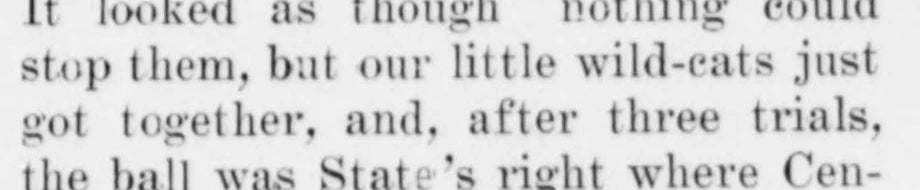
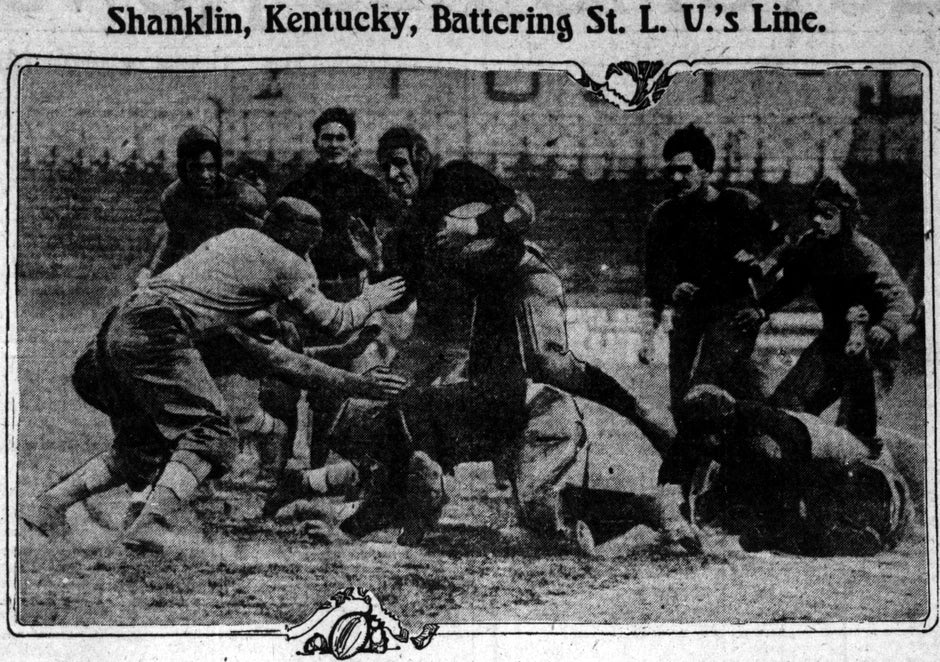
By December 1909, the student paper was calling the team “our little wild-cats.” In 1910, the name appeared in the St. Louis press too.
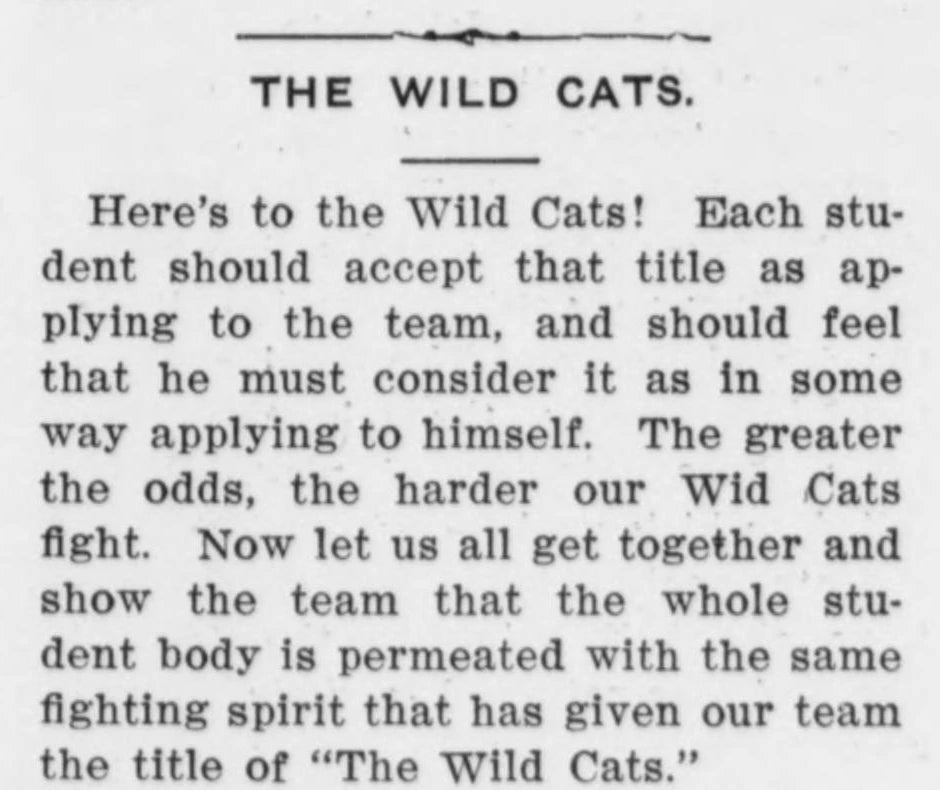
The next fall, “The Wild Cats” described more than a team. The student paper made it a way to meet a challenge.
The name was real.
The origin story evolved.
1916
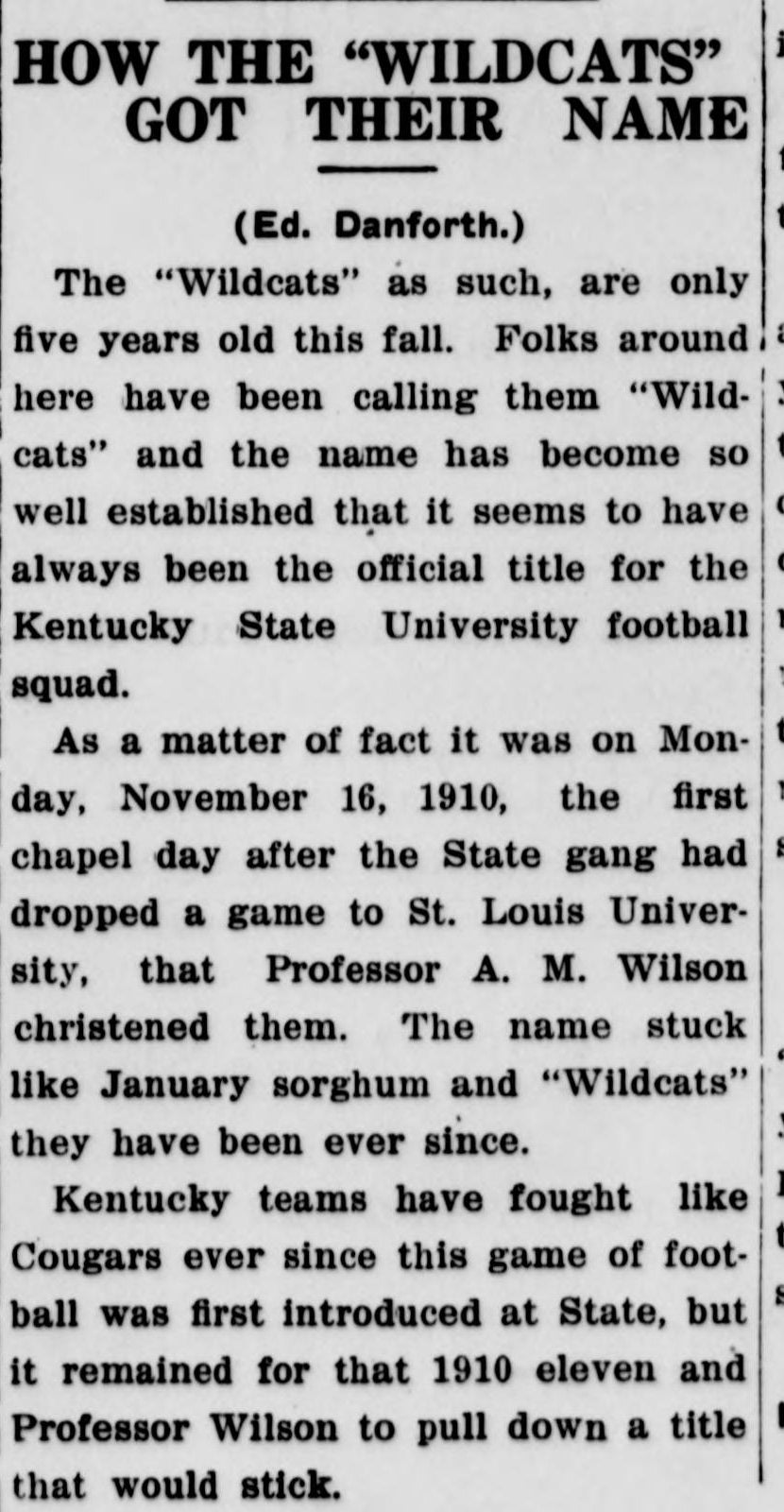
“How the Wildcats got their name.”The Kentucky Kernel, February 17, 1916 Ed Danforth credits Prof. A. M. Wilson after the St. Louis game of 1910.
1917
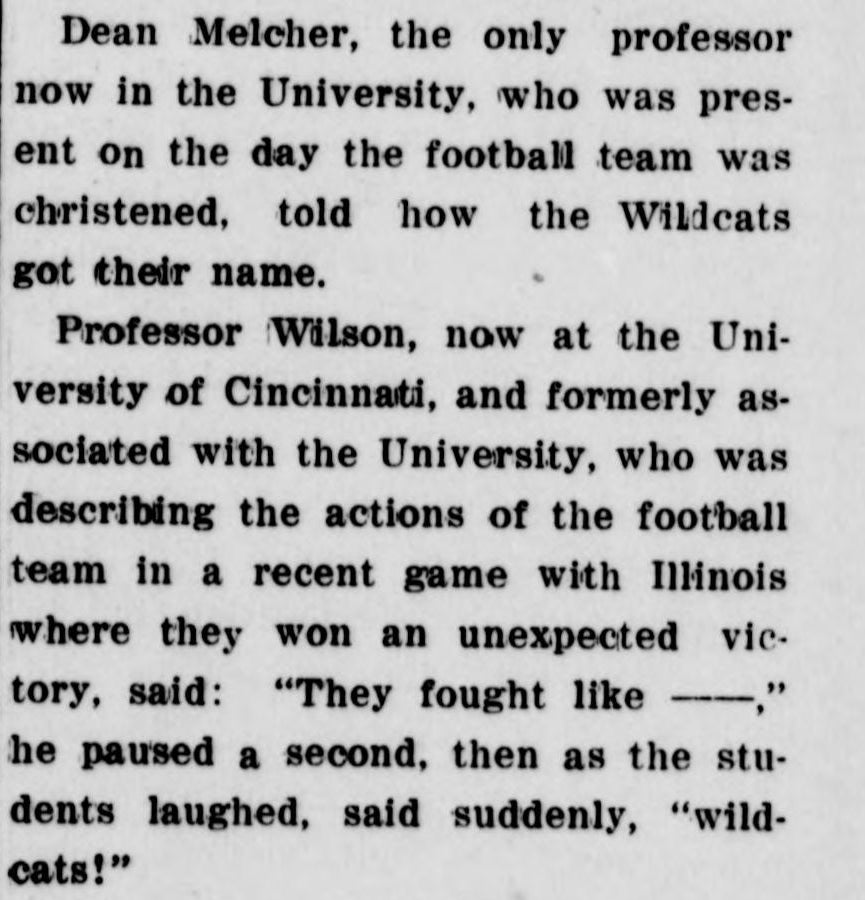
A second account of the naming.The Kentucky Kernel, October 18, 1917 Dean Melcher recalls Wilson speaking after the Illinois victory of 1909.
LATER
The commandant.
Later tradition credits the school’s commandant.
The name had already taken hold.
First a name.
Then an animal.
In 1920, the student paper reported a plan for a real wildcat for teams already called Wildcats. A live animal was documented by January 1921.
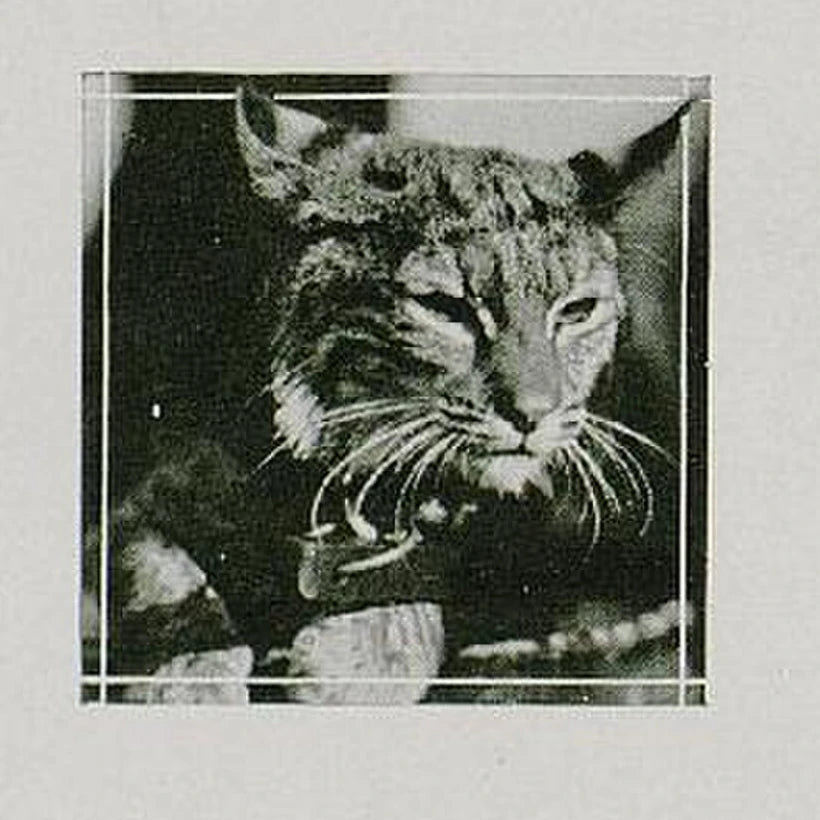
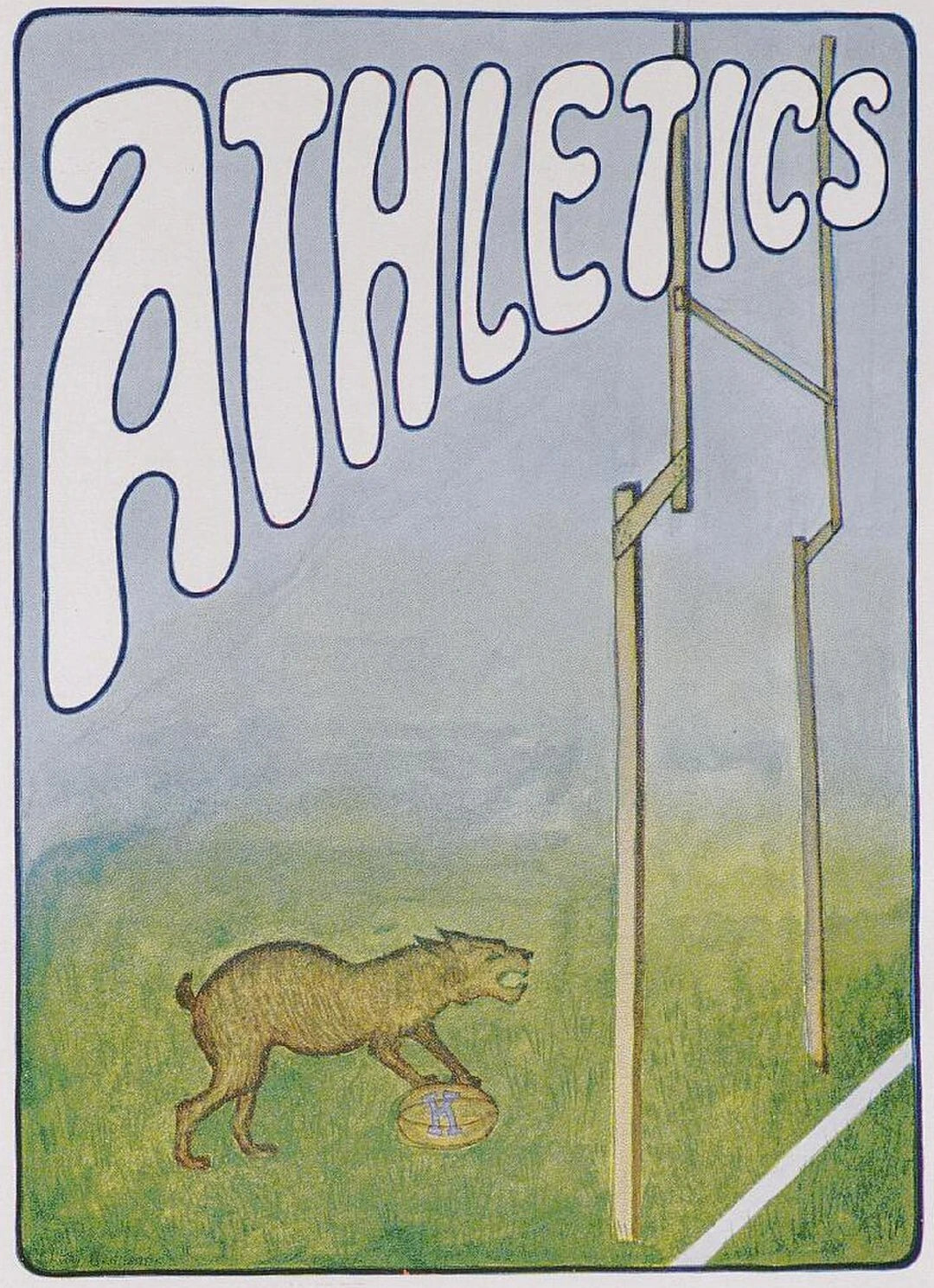
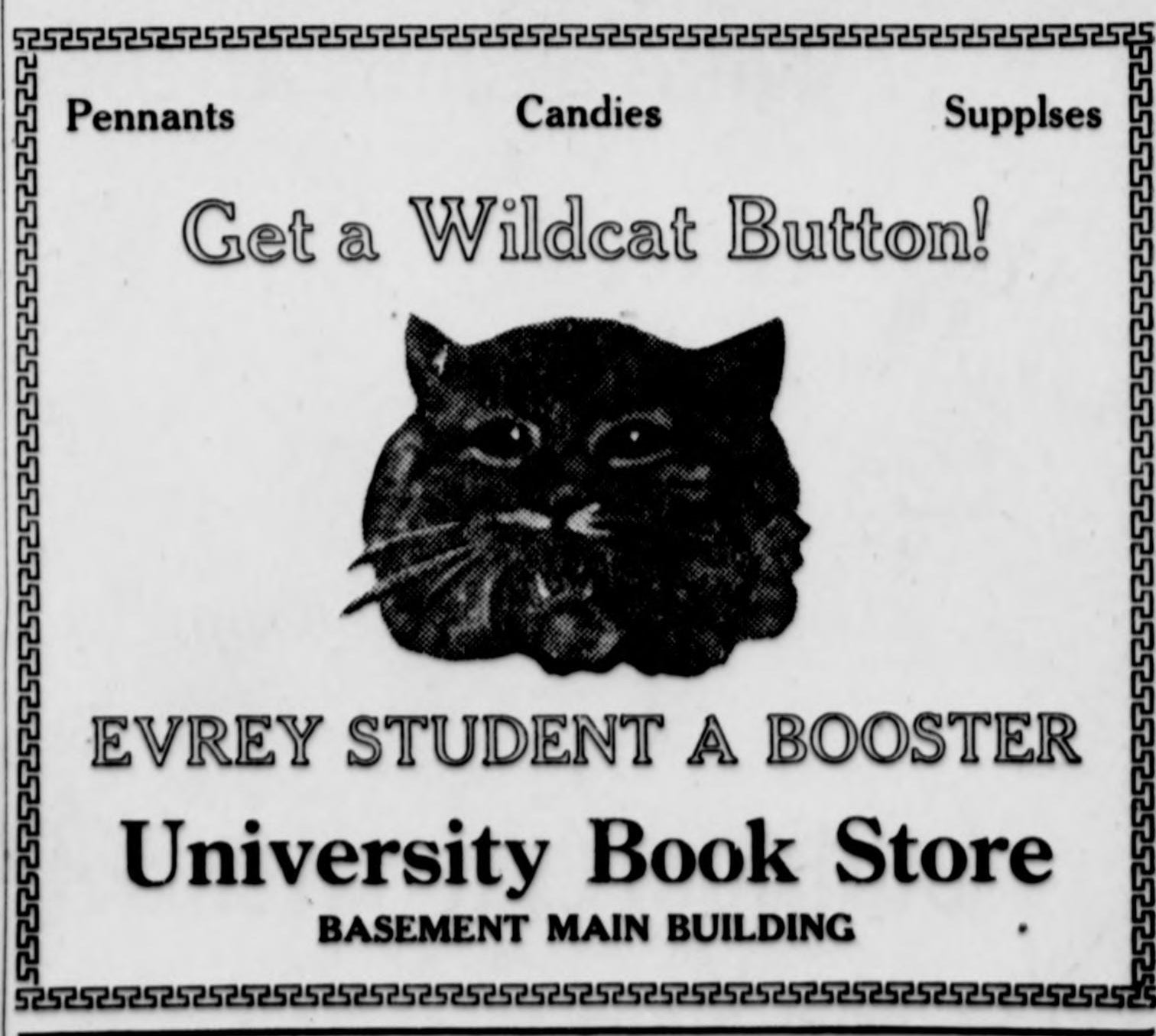
The drawn symbol and the live animal overlapped. By 1924, students could buy a Wildcat button.
A student becomes the Wildcat.
The 1978 yearbook records Gary Tanner wearing the costume for two years.
What began as a name became a symbol Kentucky could see, rally around and claim as its own.
Cats are the only
kings around here.
For GOTH, the Wildcat represents survival, toughness and belonging. Cats × Kings crowns that symbol and pairs it with Ramel “Smooth” Bradley’s image: a New Yorker who wore Kentucky across his chest and carried it with him.
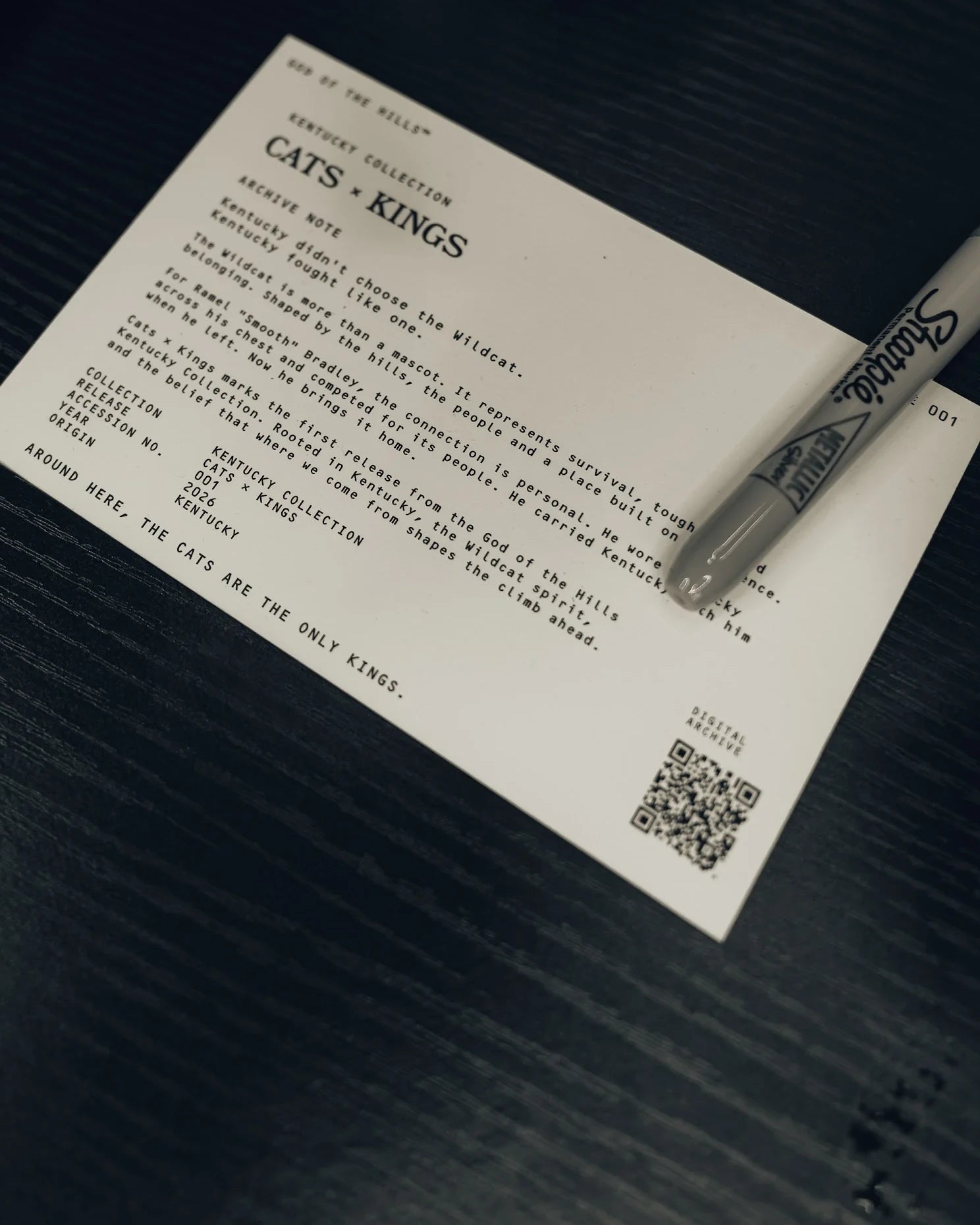
GOTH’s words, written for the card. Not a 1909 quotation.
Brooklyn shaped Ramel Bradley.
Kentucky became part of his story.

Ramel grew up in Clinton Hill. At Kentucky, he wore #3 for four seasons.
Years later, he remembered Senior Day: thinking it was his last time on that court, then hugging Joe Crawford.
Cornelison’s 2007 photograph becomes the halftone on the Smooth Tee.
THE SYMBOL, WORN.
By 1941, the Wildcat had moved onto clothing.
“In the physical education classes the usual perspiration ensemble—gray sweat shirt with Wildcat emblem and gray sweat pants—will be seen.”
John Carrico’s comic sports-fashion column. The Kentucky Kernel, March 21, 1941.
Only Kings × Wildcat Tee
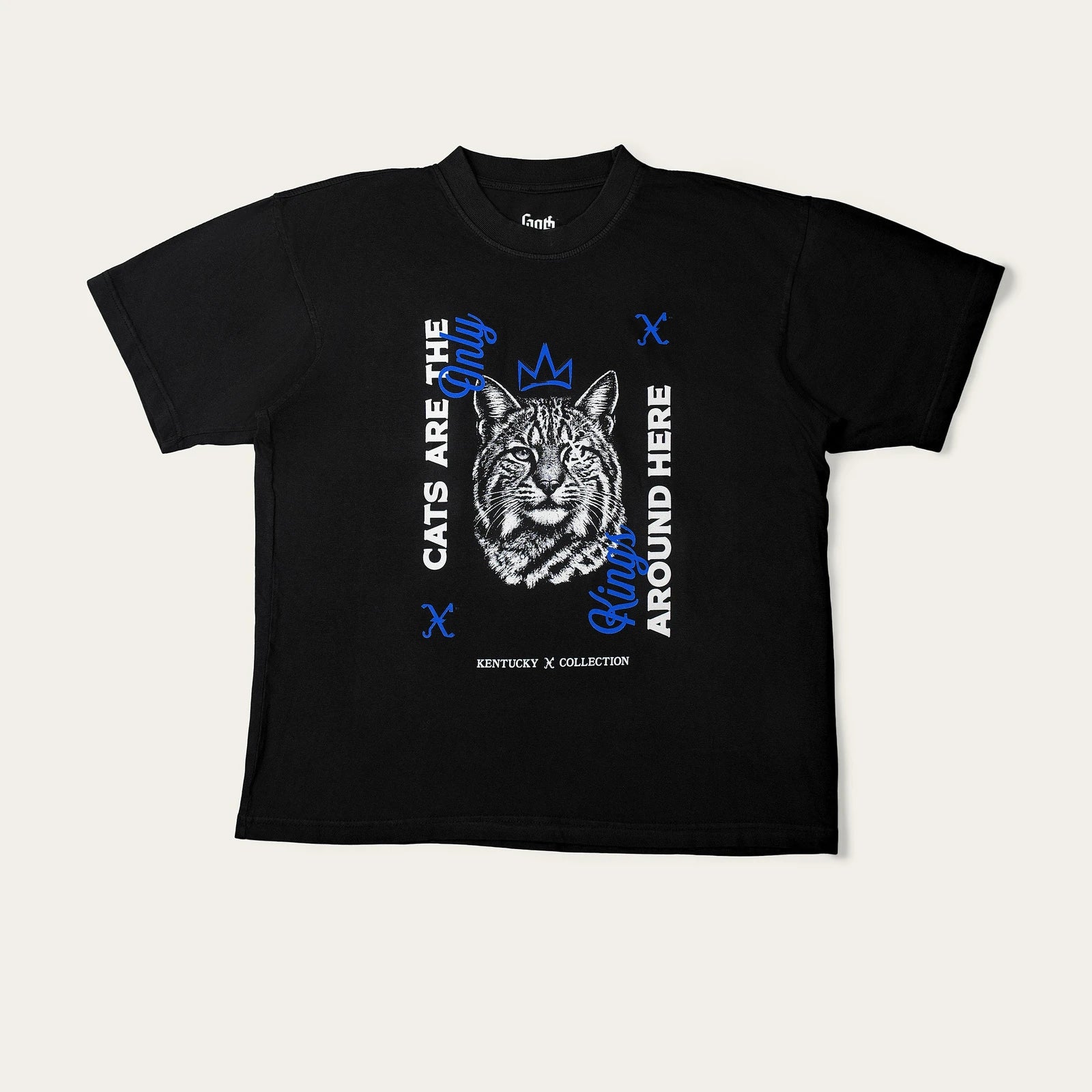
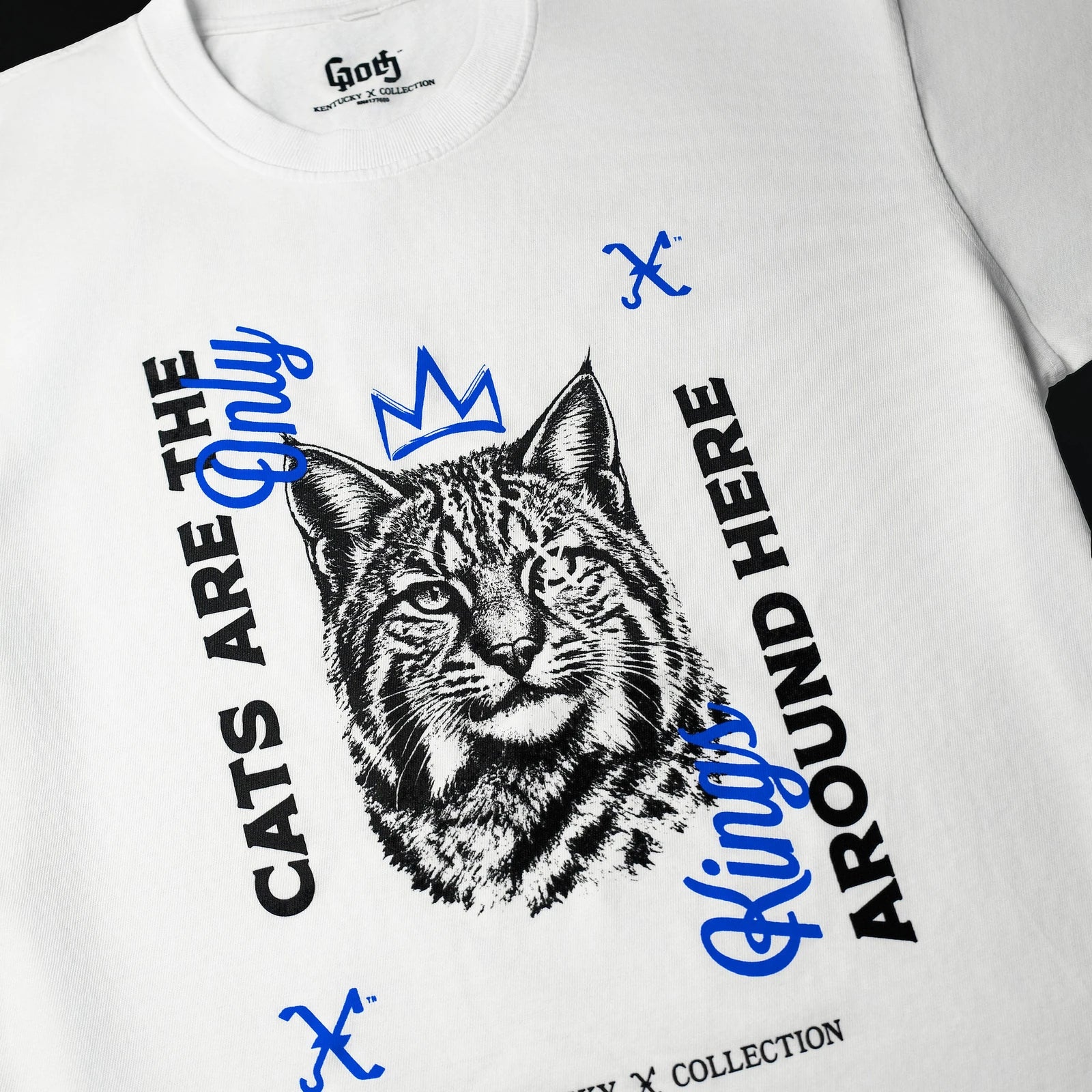
The Wildcat, crowned. The Crook × Flail marks the eye.
VIEW THE PIECE →Only Kings × Smooth Tee
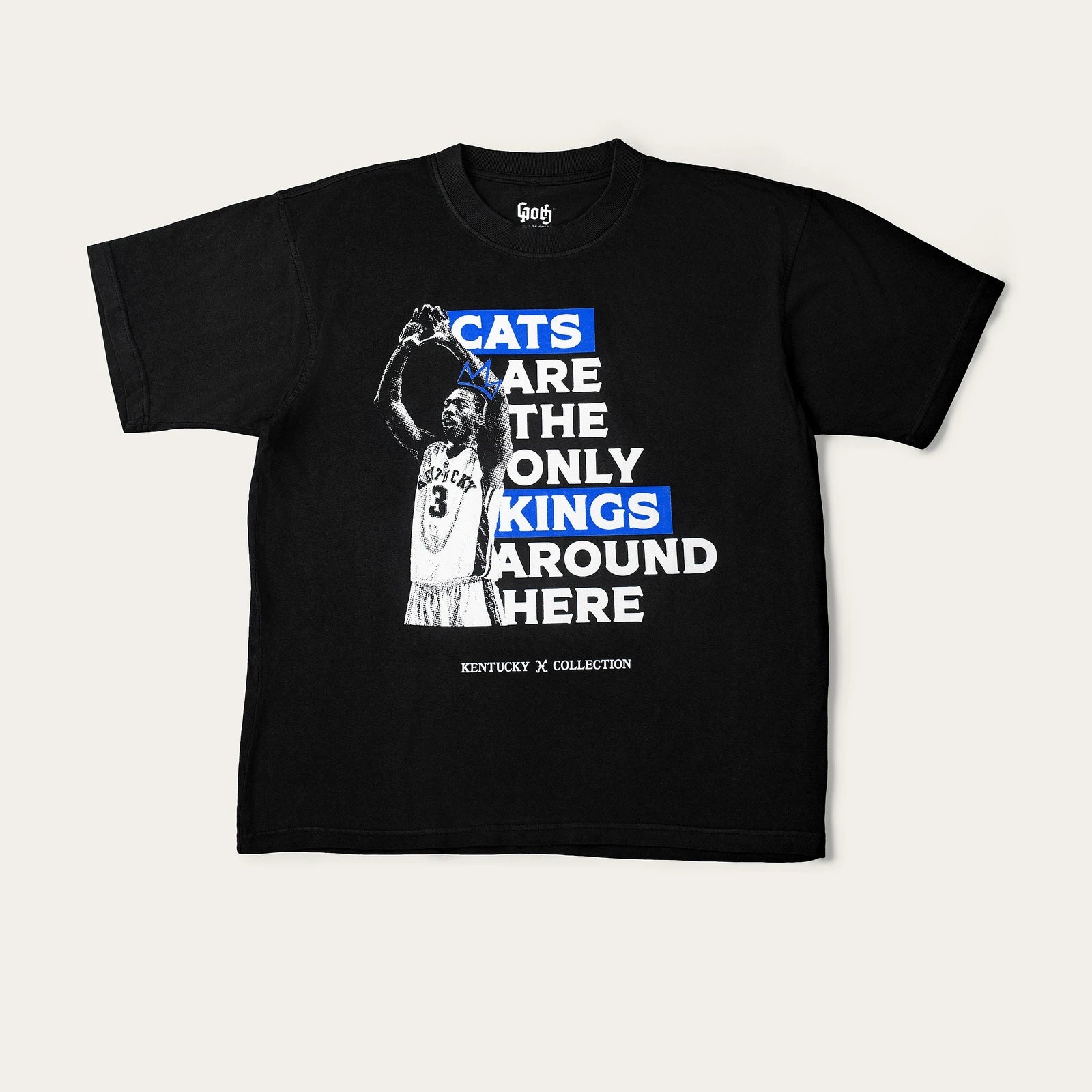
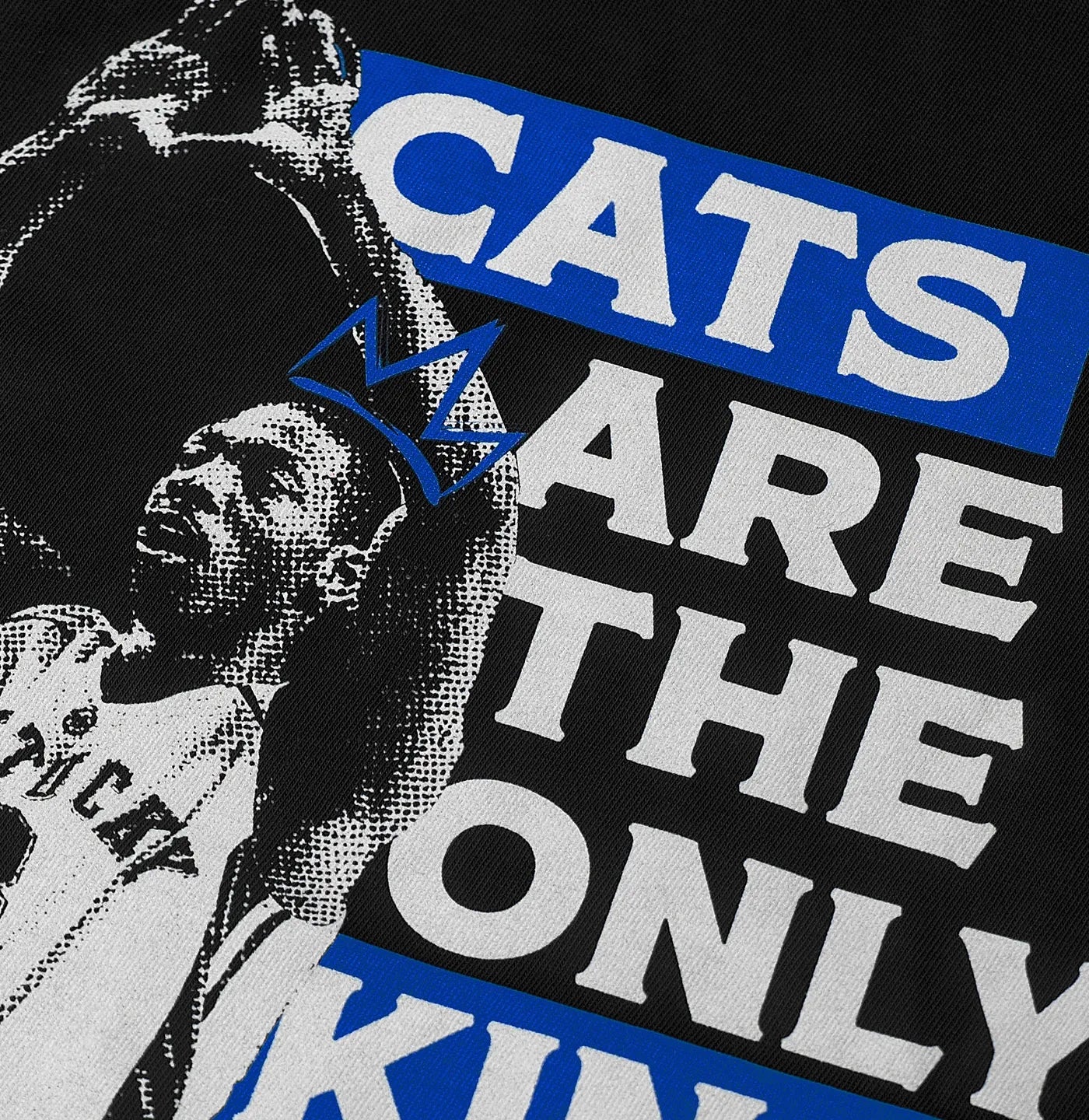
Cornelison’s photograph, translated into halftone. Kentucky #3 on the front; SMOOTH 3 on the back.
VIEW THE PIECE →Only Kings × Cap
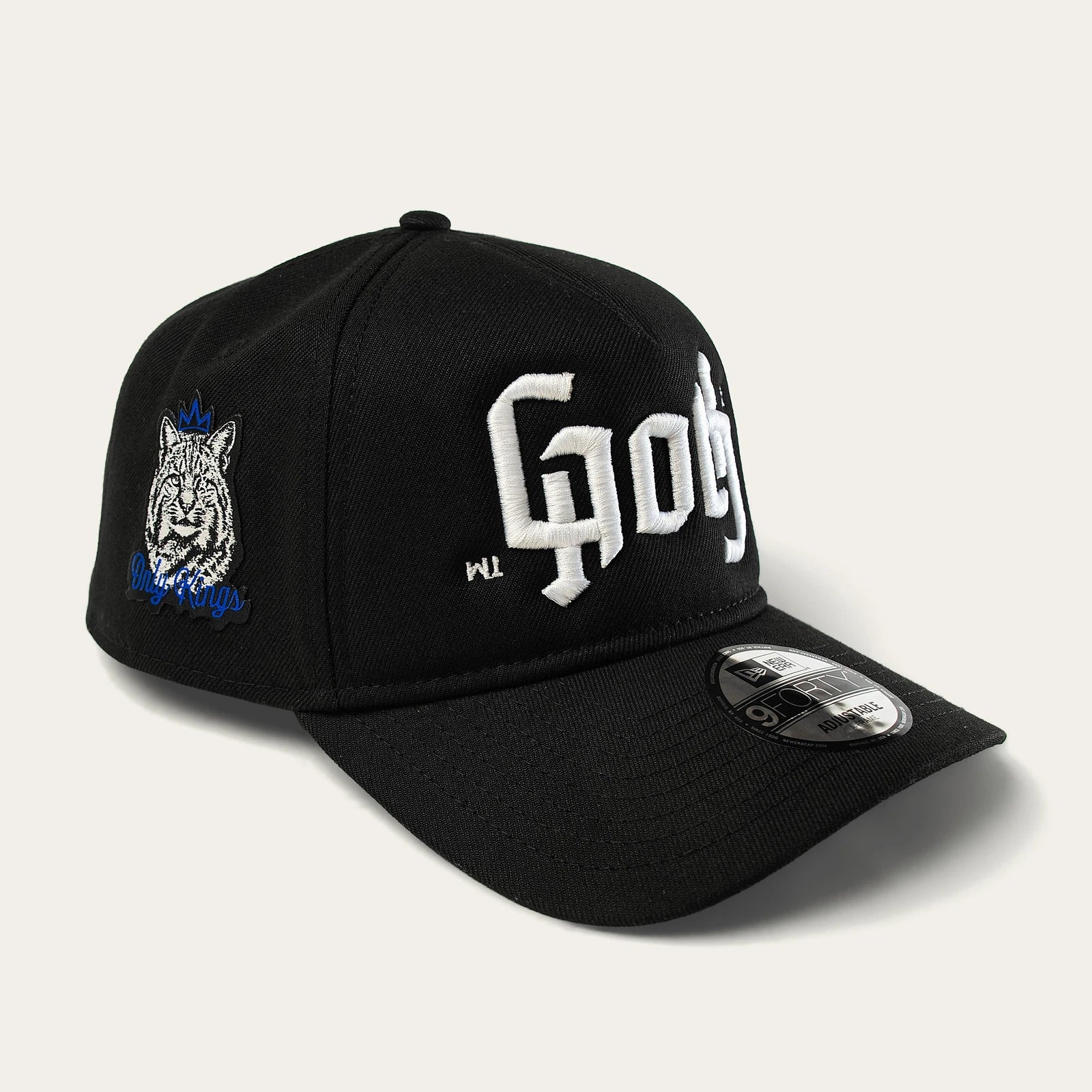
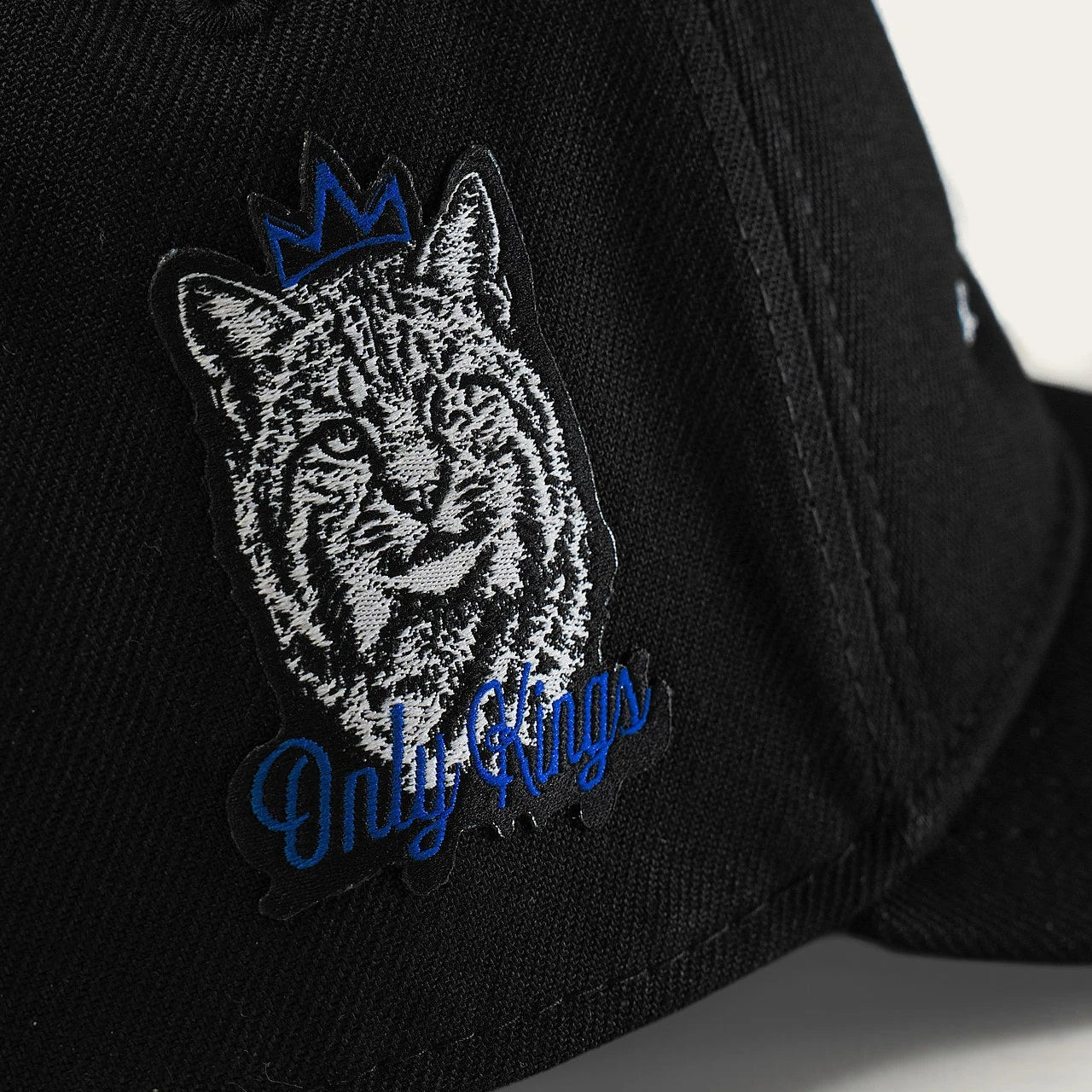
Wildcat. Crown. Only Kings. The symbol becomes a woven side patch.
VIEW THE PIECE →FILM TRANSCRIPT
Ramel Bradley
They say the lion is king, but the lion rules the open plain. The wildcat rules somewhere else. In the hills, in the woods, in the shadows, in the cold. It moves in stealth mode, patient, quiet, watching. It doesn't need to announce itself. It doesn't need a throne. It knows the terrain, the ridges, the valleys, the back roads, the places most people never see. It moves through hard ground, through winter, through uncertainty. Sometimes it walks alone, but it survives. And when the moment comes, it strikes.
CATS X KINGS / CATS ARE THE ONLY KINGS AROUND HERE / GOTH ambigram
A COLLECTION
TO RALLY AROUND.
What began as a name became an identity Kentucky could carry. Cats × Kings carries that spirit forward.
THE RECORD REMAINS OPEN.
SOURCES & NOTES
Period evidence, later accounts and GOTH interpretation remain distinct.
The Idea / October 14, 1909
The Idea, October 14, 1909. Scan: University of Kentucky Libraries, KDNP, CC BY 4.0; cropped.
A cartoon of Lexington’s celebration, not a photograph of the game. This page does not record the later attributed commandant remark.
The Idea / October 21, 1909
The Idea, October 21, 1909, p. 6, “Foot Ball Comments.” The columnist wrote “fought like little demons.” Via Internet Archive (University of Kentucky Libraries, KDNP).
“our little wild-cats” / December 2, 1909
The Idea, December 2, 1909. Scan: University of Kentucky Libraries, KDNP, CC BY 4.0; cropped.
A single 1909 instance; none found in the following ten months.
“THE WILD CATS.” / October 27, 1910
The Idea, October 27, 1910, p. 5. Scan: University of Kentucky Libraries, KDNP, CC BY 4.0; cropped.
The competing naming accounts
Later retellings, cited and summarized, not reproduced: The Kentucky Kernel, December 1, 1931; Louis Haynes, “Sport Shorts,” The Kentucky Kernel, October 30, 1936 (the earliest found to credit the school’s commandant); The Kentucky Kernel, March 24, 1942 (its 1919 date is wrong). Via Internet Archive.
The Kentucky Kernel, December 1, 1931
The Kentucky Kernel, October 30, 1936
The Kentucky Kernel, March 24, 1942
The University’s institutional tradition
University of Kentucky, History and Traditions, “Wildcat Nickname” (web page, read October 2026). As the University tells it, the school’s commandant, Philip W. Corbusier, told students the team had fought like wildcats after the Illinois game. No record of those words from 1909 or 1910 has been found. The earliest commandant retelling found is in the Kernel of October 30, 1936, twenty years after the earliest Wilson account found.
The Archive 001 card
Photograph: ShotByDdot. Archive card: GOD OF THE HILLS.
Ramel Bradley / January 10, 2007
Photograph: Mark Cornelison / Lexington Herald-Leader. Kentucky-Auburn, January 10, 2007.
The heading is an interpretive paraphrase, not a direct quotation from Ramel.
Product photographs
Product photographs: ShotByDdot. Only Kings × Wildcat Tee and Only Kings × Smooth Tee, September 29, 2026; Only Kings × Cap, October 5, 2026. Lint healed; straightened; light and color corrected, the blue ink set to the artwork’s hue; grounds re-laid or balanced. Nothing in the print is redrawn. The Crook × Flail eye mark is not legible in the produced cap patch.
A detail of the product photograph shows the halftone and colored ink on the actual garment.
Only Kings × Wildcat Tee
Only Kings × Smooth Tee
Only Kings × Cap
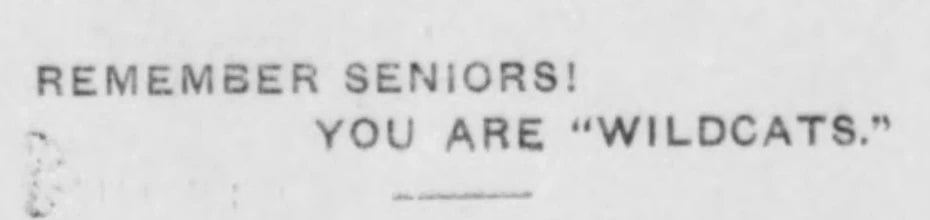
“YOU ARE ‘WILDCATS.’” / May 25, 1911
The Idea, May 25, 1911, p. 4. Scan: University of Kentucky Libraries, KDNP, CC BY 4.0; cropped.
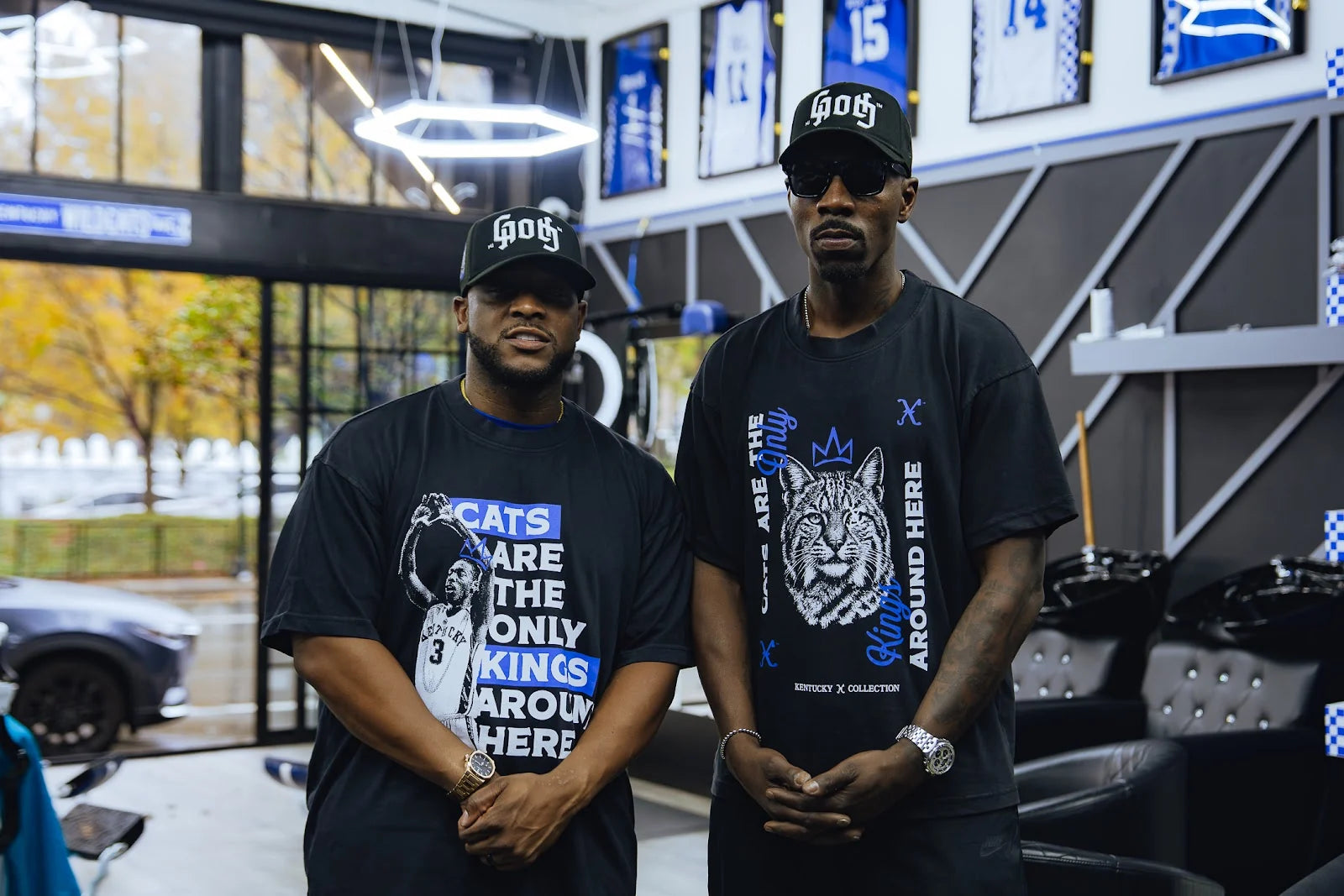
The collection worn / October 2, 2026
Photograph: ShotByDdot. Courtside Cuts, Pregame Madness, October 2, 2026. Two unnamed adults wear the pieces; it documents wearing, not a purchase or endorsement.
Public sale / online launch
The Kentucky Collection was sold publicly at Pregame Madness on October 2, 2026, and went online on October 9, 2026. The online release fell 117 years to the day after the October 9, 1909 game, a date coincidence, not a chosen anniversary.
A live wildcat, pictured in the yearbook. / The Kentuckian, 1922, p. 132
The Kentuckian, 1922, p. 132. Scan: University of Kentucky Libraries / ExploreUK, via Wikimedia Commons; cropped.
The Wildcat, illustrated for athletics. / The Kentuckian, 1916, p. 111
The Kentuckian, 1916, p. 111. Scan: University of Kentucky Libraries / ExploreUK, via Wikimedia Commons; cropped.
“Get a Wildcat Button!” Bookstore advertisement. / The Kentucky Kernel, October 31, 1924
The Kentucky Kernel, October 31, 1924, p. 8. Scan: University of Kentucky Libraries, KDNP; cropped. No Creative Commons licence is asserted for this scan.
UK Athletics / 2008-09 Men’s Basketball Fact Book
UK Athletics, 2008-09 Men’s Basketball Fact Book, career statistics (p. 74) and lettermen (p. 129). Via Internet Archive.
The Kentucky Kernel / October 29, 1920
The Kentucky Kernel, October 29, 1920, p. 1, “Real Wildcat to Be Team Mascot.” Dr. Funkhouser’s plan for a live mascot; the teams were already called Wildcats. Via Internet Archive (University of Kentucky Libraries, KDNP).
“How the Wildcats got their name.” / The Kentucky Kernel, February 17, 1916
The Kentucky Kernel, February 17, 1916, p. 4, Ed. Danforth. The earliest naming account found. Its chapel date is internally wrong, and the student paper used the name from December 1909. Scan: University of Kentucky Libraries, KDNP, CC BY 4.0; cropped.
A second account of the naming. / The Kentucky Kernel, October 18, 1917
The Kentucky Kernel, October 18, 1917, p. 4. The Kernel’s report of Dean C. R. Melcher’s recollection, not a 1909 quotation. Scan: University of Kentucky Libraries, KDNP, CC BY 4.0; cropped.
Tucky / The Kentuckian, 1959
The Kentuckian, 1959. Captioned “This is Tucky, the Wildcat mascot.”
A student becomes the Wildcat. / The Kentuckian, 1978
The Kentuckian, 1978, p. 252, “Who’s That Wildcat!”
St. Louis Post-Dispatch / November 13, 1910
St. Louis Post-Dispatch, November 13, 1910, Part Three, p. 9. The earliest use found outside the student press. The same page also calls the team “the Colonels.” Via Internet Archive; cropped.
The Kentucky Kernel / October 2, 1958
The Kentucky Kernel, October 2, 1958, p. 1. Via Internet Archive.
The Kentucky Kernel / November 9, 1956
The Kentucky Kernel, November 9, 1956, “Wildest Cat Will Not Be Present For Tomorrow’s Homecoming.” Accounts differ on the Colonel’s origin and retirement date. Via Internet Archive (University of Kentucky Libraries, KDNP).
Tucky, back from Tennessee. / The Kentucky Kernel, March 12, 1959
The Kentucky Kernel, March 12, 1959, p. 1, “Love That ‘Tucky’” and “’Tucky Is Returned After 4-Month Stay.” Scan: University of Kentucky Libraries, KDNP; cropped. The photograph is uncredited.
“Running Wild” / The Kentucky Kernel, March 21, 1941
John Carrico, “Running Wild,” The Kentucky Kernel, March 21, 1941, p. 4. A comic column. The 1941 / 2026 pairing is a parallel, not a design lineage. Via Internet Archive.
From the Pressbox: Tom Leach goes one-on-one with “Smooth”
“From the Pressbox: Tom Leach goes one-on-one with ‘Smooth’.” UK Athletics, February 8, 2011, from The Leach Report radio interview.
Mad Men
Todd Warnick, “Mad Men,” Tablet, March 21, 2012: “He comes to Jerusalem’s practices in Wildcat blue.” The journalist’s description, not Ramel’s words. 2012 / 2026: a parallel, not a design lineage.
Panthers surprise Juice All-Stars
David Benezra and Mark Mayemura, “Panthers surprise Juice All-Stars,” ESPN.com, July 26, 2002. Before Kentucky, Ramel played in Brooklyn’s summer basketball network.
Former UK player on a mission to end hunger
John Reitman, “Former UK player on a mission to end hunger,” The Advocate-Messenger, August 24, 2022.
The Kentucky Kernel / January 18, 1921
The Kentucky Kernel, January 18, 1921, “Kentucky Teams Have Real Wildcat Mascot.” Via Internet Archive (University of Kentucky Libraries, KDNP).
Richmond Climax / March 7, 1913
Richmond Climax, March 7, 1913, “State University News.” The earliest non-student Kentucky use found. Via Internet Archive (University of Kentucky Libraries, KDNP).